Pages

Showing posts with label biscuits. Show all posts

Wednesday, 12 December 2012

A Simple Christmas


It's really getting festive round here.  At the house where I live, (where Christmas is very savoury-food-centric), the fridge is beginning to fill with ham, sausagemeat, red cabbage and turkey liver for patĂ©.  I'm sure that at my father's flat the big red wooden reindeer full of drawers is doing his Advent duty.  Only yesterday I spent a very happy morning decorating the window of the shop where I work.  The air is nippy; the frost is on the ground; Oxford Street is heaving.

It's really high time we all started getting sorted, so to help out, I'm posting a list of all the festive advice and recipes I've given on this blog in one place.  You'll notice that there are some conspicuous absences from this list - nativity scenes, Christmas pudding, turkey or goose recipes, mince pies, and so on.  At some point I will post my recipe mincemeat mince pies made with real minced meat - not mincemeat, minced meat - or meatmince, if you will.  But I have to get them perfectly squidgy and flavoursome first.  As for the rest - I can only blog so much a year!

Decorations:
Needle felted
Leather

Christmas (fruit) cakes:
Figgy Upside-Down
Marzipan Painted Fruitcake
Orange Upside-Down Layer Cake

European Christmas Biscuits:
Pepparkakor recipe
Gingerbread house template
Gingerbread stave church
Basler Brunsli 

Traditions:
Die Hard and Biscuits
Advent

Flower arranging:
Christmas Greenery


Tuesday, 12 June 2012

Afternoon Tea Cakes

The other weekend, for the Jubilee, I hosted an afternoon tea party.  Some cakes were classic recipes I followed almost to the letter, and suggest you do the same; with others, I got a bit more creative.  When you're baking all day it's best not to strain the brain too hard.

Classic scones - I turned to the BBC's recipe here, for simplicity.  Breads and I have never really clicked, so I wanted firm guidance from Auntie.  Make scones on the day for freshness and warmth that will impress.


Palatial shortbread  - Millionaire's shortbread is fast becoming a family favourite, and you can find versions of it in hip coffee chains all over the country nowadays.  My version is slightly more decadent even than the Beeb's.  Following their recipe mostly, I added 2 teaspoons of ground cardamom to the shortbread mix (a combo I picked up from here years ago).
I did accidentally turn my back on the caramel resulting in a delicious fudge.  I left the butter out of the dark chocolate mixture, for depth of flavour, and instead of white chocolate decorated the tops when still tacky with silver balls.

Rhubarb tartlets - all my own work
You Will Need: fairycake tin with twelve holes, large bowl, scales, dinner knife, clingfilm, rolling pin, pastry cutter/glass, small pan, small bowl, cup, chopping board and sharp knife, wooden spoon, fork, teaspoon, baking tray
2oz cold butter
1oz ground almonds
1 tsp ground ginger
3oz plain flour
1-2 stems ripe red rhubarb
butter
2 eggs
double cream
caster sugar
jar of crystallised ginger

1) Make the pastry.  Cut the butter into little cubes.  Knead with the dry ingredients with your hands, first to breadcrumb stage and then squidging into a single ball.  Wrap in clingfilm and chill in the fridge for half an hour.
2) When the pastry is cold, preheat the oven to 180 C.  Roll the pastry out on a floury surface until 3-4mm thick.  Be aware that this pastry is very 'short' or flaky.  It will not like you!  Do not despair.  Cut circles out of the pastry and press them into the tin, squidging any cracks together with your fingers.  You should be able to make at least 6. I got 7.
3) Poke two sets of holes into the bottom of each pastry case with your fork, to allow any air bubbles trapped underneath to escape and not bugger them up.  Bake until golden brown, about 10 minutes.
4) Allow the cases to cool completely before touching them again.  If tempted, make more cake while waiting.
5) When the cases are cool, trim the ends off your rhubarb and pull out any stringy ribs from the square edges.  Chop it into 2-3cm pieces, and if they are fat, halve them lengthways.  Put 2-3 pieces of rhubarb per pastry case into a small pan with a knob of butter and a splash of water.  Fry/poach the rhubarb, adding a little more water as it evaporates, until the rhubarb is pink and tender and strings are coming off it.
6) Lift the pastry cases onto a sturdy baking tray and fill them with rhubarb.
7) Separate the eggs, with the yolks going into a small bowl and the whites a cup (save whites for meringue in the fridge).  Add a small pile of sugar.  Beat this together with a fork.  Gently heat enough double cream to cover the bottom of your small pan.  Add the eggmix and stir quickly to blend.  When blended, take off the heat and carefully spoon into the pastries, around the rhubarb.
8) Put back in the oven (hey I didn't say to turn it off) for another 7 minutes, to bake the custard and roast the tips of the rhubarb.  When out of the oven, drizzle some of the sugar syrup from a jar of crystallised ginger over the top of each one.  This makes all the difference.


Mini battenberg
This is a lovely recipe from the Hariy Bikers.  I only made one egg's worth of sponge, dividing my tin with their greaseproof paper trick into 3 - half for battenbergs, and one for my shortbread.  I also added lemon zest and a splash of juice to the 'yellow' Berg, and used 3 tsp of raspberry jam to colour the pink Berg as I couldn't find the mother-out-law's cochineal.

Sunday, 11 December 2011

Gingerbread Stave Church


If you made the gingerbread house from last post, and fancy knocking things up a notch, why not put another couple of layers and some chocolate fingers on it and make a small stave church?  It's the perfect mix of Jesus and Vikings for the Christmas season, and you can even destroy it like a marauding pagan later.

Gingerbread (well, Pepparkakor) Stave Church
You Will Need:
Remaining pepparkakor dough; ruler, pencil, squared paper, scissors; greaseproof paper, baking trays, rolling pin; royal icing; dinner knife; small bowl, small amount of dark chocolate; 2-3 packets dark chocolate Cadbury's biscuit fingers; cake decorations of choice. 

1) Using your house pattern as a template, draw out another wall/roof layer, a tower and a pointed steeple onto squared paper, each about 3cm high.  The second layer should start about 4cm from the eaves of the first.
2) Retrieve your remaining dough, and roll it out to 3mm thick.  Cut out two of each wall, gable and roof, and four triangular steeple-pieces.  With the remaining scraps, make dragons, crosses and a weathercock to stick to the roof.
3) Make a batch of royal icing using 1 egg white and 8oz of icing sugar, and/or use any remaining from making the gingerbread house.
4) Stick the gable pieces to the roof of the house.  Add Wall 2 between the gables on each side, using skewers to prop up the bottom edge.  Allow to set for a good while before attempting Roof 2.  Glue everything together well with icing.  Allow to set.
5) Add the tower pieces to Roof 2. Complete with the steeple pieces.
6) While the steeple is setting, melt a little chocolate in a small bowl in the microwave on a low setting.  Use the chocolate to stick chocolate fingers to the large gable ends and walls of the church. Leave some space on one end for a door.
7) Spread more icing on the roof, and use to stick Shreddies, flaked almonds, jelly diamonds or other small tile-like sweetnesses on.  I only did a row per roof as I ran out of icing, but may do more later.  This is a good point to involve any small children you may have hanging about.
8) When you have finished decorating the walls and roof, add the dragons to each corner, crosses to each end, and weathercock on top of the steeple: Break the pointy end off a skewer to roughly the height of the triangular steeple, plus 2cm.  Insert the pointy end into the edge of the weathercock carefully, supporting with icing if necessary.  Post the blunt end through the top of the steeple, to rest on the top edge of Roof 2 inside the tower. 

9) Place the church in its final resting-place, and sift icing-sugar snow over the top if desired.  I did this to mine at the last minute before Christmas to prevent icing sugar getting everywhere in the meantime. 


Saturday, 10 December 2011

Gingerbread House

Last year I tried to make a gingerbread house, and it didn't work *super* well because it was too house-shaped.  Most templates on the interwebs have very steep roofs and short walls, as this makes balancing easier.  When I drew my template for this year, I made it steepy too.

Yaay shoddy MS Paint diagrams are back!
The numbers are measurements in centimetres.  Cut the shapes out of squared paper to make them easy to measure.

Gingerbread House
You Will Need: (Squared) paper, pencil and rubber, ruler, scissors; one batch of dough to make pepparkakor; greaseproof paper, baking trays, rolling pin, cooling rack; teatray, tinfoil; scales, small bowl, whisk, dinner knife, piping bag (or a freezer bag with one corner cut off to make a tiny hole), wooden skewers; cake decorations of choice.

1) Using my recipe from last year, make the pepparkakor dough.  While it is resting in the fridge for at least half an hour, draw out the templates.  The squared paper will make it much easier to get straight edges.  Cut out one of each shape.
2) Preheat the oven to 175 degrees C.  On a floured surface, roll out half the dough until it is about 3mm thick.  Cutting around the templates, make two of each shape.  Save all the remaining dough clingfilmed in the fridge.
3) Cover the baking trays in greaseproof paper and lay the shapes out on the trays with plenty of room to spare.  If necessary do them in two or three batches.
4) Bake for 10-15 minutes until really golden and getting dark around the edges.  This ensures stiffness.
5) When they are ready, take the shapes from the oven and allow to cool for a good while on the trays, before transferring to cool completely on the rack.  Go and do something productive for half an hour to make sure they are completely cool.
6) Select where you want to put your house, and make sure that the teatray can sit there without any danger of being bumped into.  Cover the teatray in a single layer of tinfoil, sellotaping the foil to the back of the tray at the edges.
7) Make the royal icing to stick the house together:  whisk an eggwhite in a small bowl until frothy.  Incorporate eight ounces of icing sugar a little at a time until really thick and glossy.
8) Assemble the house, using the piping bag or erzatz piping bag to draw straight 'foundations' of icing on the tinfoil for the walls and gables.  Using volunteers, wooden skewers broken to size or a combination of both, hold up the walls and roof until you are sure you can leave the house alone.  This should be at least 3 hours to be on the safe side.
9) Using more icing, stick cake decorations, sweets and so forth to the roof and gable ends of the house.  If you wish it is safe to involve small children at this point.  If you have a really steady hand you may be able to pipe icing icicles down from the roof. 
10) Place the house in its eventual home, and scatter icing sugar over for snow if desired. 

You may notice that you have some dough left over.  Well noticed!  Save all the bits, because if you feel in the need for something a bit more ambitious, skip stages 9 and 10 and come with me to the next post for a Gingerbread Stave Church...you'll need all your remaining dough.  If you don't want to do that, you could make more happy shapes to surround your house with or to hang on the tree threaded with ribbon.

Monday, 28 November 2011

Advent


The boy and I were reflecting again recently on how much our culture in Britain has been steeped in Christianity - how it has permeated everyone's cultural consciousness to the point that we no longer notice.  It was brought home to us most recently when we tried to expose some Malaysians to Monty Python by showing them Life of Brian.  It wasn't the weird humour which went over their heads - it was the whole 'Brian is a bit like Jesus lols' thing.  It had just never occurred to us that anyone would be so unfamiliar with the New Testament as to go 'oh, so that's the three wise men is it? oh yeah...'

Christmastime for obvious reasons is another one of these cultural events with a lot of subtle and not-so-subtle Jesus in there to trip the unwary.  But sometimes the Jesusy bits are the best bits.  The above photo is an Advent wreath - the candles are supposed to symbolise key virtues or people, depending on tradition, and are lit one per Sunday in December counting down to Christmas.  Lovely.  Trust the Germans to invent a way of celebrating the birth of Our Lord which involves setting things on fire for an extended period of time.

I've never made an Advent wreath, and we don't have room for one in either of my current residences really, but I am beginning to count the days in my own way.  The present-buying has started, and I am starting to think about the number of biscuits and cakes I should make this year, and what kinds.  I never got round to posting my christmas cake recipe last year, but I have some good ideas for 2011 already. 

I'm looking forward to spending this festive season at home with my family, for the first time in some years.  We're big biscuit-eaters and present-appreciators, and there will be viewing of Muppet DVDs and old friends and emphatically not turkey to eat.  Bliss.  Now all we need is a little snow (and accompanying bucket of grit).

Thursday, 6 October 2011

Autumn Leaves

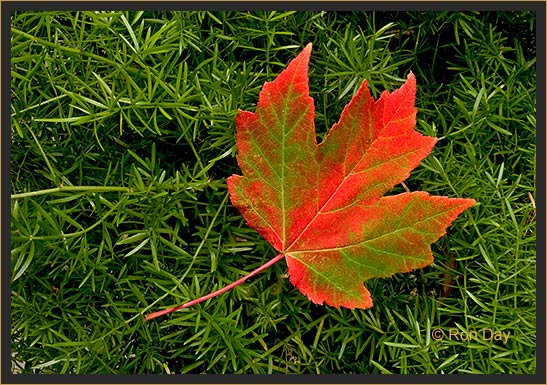
Copyright RondayPhotography
"You know what's weird?"
"What?"
"Walking through dead leaves in flip-flops."

We did have a bit of an Indian summer this year (as I'm sure those in the UK have noticed) and during the heatwave I was comissioned once more to make a birthday cake for my Dad's friend A.  Previous inventions have included an apple-and-Calvados Arctic-themed thing, with meringue icebergs and marzipan polar bear; and last year, a chocolate-orange loaf stack with candied orange slices and candied peely squiggles.  This year I went for an autumnal vibe, because when I'm stuck for a birthday in autumn I go with Nigella Lawson and plump for maple syrup and pecans.  The cake will follow, but I decorated it with these.

Autumn Leaves
You Will Need: Rolling pin, baking tray, greaseproof paper, dinner knife or specially-shaped biscuit cutter, chopping board and knife / food processor, cup, pastry brush

One slab frozen/ready-rolled puff pastry
Plain flour for rolling
Pecan nuts, finely chopped
2 egg yolks
Maple syrup

1) Roll out the puff pastry quite thinly - between 2 and 3mm thick.  Cut, using a knife or specialised implement, into the shape of mapley/chestnut/sycamore leaves, with 5 points, or single tear-shapes.  (n.b. Usually when rolling and cutting pastry, ones saves, balls up and re-rolls out the snippets left behind from the first cutting.  With puff pastry, which is made in layers, this process mixes the layers and causes second-round cut-outs to rise unevenly.  Save any leftover pastry for simple quiches and put it in clingfilm in the freezer.)
2) Lay the leaves onto baking trays lined with greaseproof paper and scattered with flour.
3) Beat the egg yolks in the cup to a uniform consistency.  Brush each leaf with yolk.
4) Chop or blitz the nuts (approx. half a packet for one slablet Waitrose' own puff pastry). Sprinkle over the egged leaves.
5) Very carefully drizzle a smidgen of maple syrup onto the leaves, being careful not to get any on the baking paper if you can.
6) Bake in a hot oven (200 degrees C) for 5-6 minutes, until well risen and golden brown.  When cool, remove from the tray and present or save on a plate to eat as biscuits or use to decorate a cake.  Don't worry if smaller leaves rise oddly and spill over themselves; you can eat those and hide your shame... nom nom nom

Sunday, 2 January 2011

Basler Brunsli (with thanks to Fleur)


No, not that one!


That's better. Yes, Basler Brunsli, the Swiss Christmas biscuit which I finally got round to making in the New Year, after the kitchen had been done up enough to warrant unpacking all the boxes and therefore finding the whisk.  I'm much obliged to Fleur for this recipe, which is her family's version.  There are as many different ways of making these biscuits it seems as there are people who are aware of them, and I have added a variation this time by using Grand Marnier instead of kirsch, but this - I am assured - is the real deal.

Basler Brunsli
You Will Need:  Large bowl, another largeish bowl, whisk, wooden spoon, cheese grater and patience OR food processor, teaspoon, (mortar and pestle for cloves if whole), greaseproof paper, baking trays, clingfilm, rolling pin.

500g caster sugar
500g ground almonds
1 tsp cinnamon
1/2 tsp ground cloves, approx. 15 whole ones ground
90-100g quality dark chocolate, grated or processed
4 egg whites
1-2 dashes kirsch/other festive spirit

1. Mix all the dry ingredients in the larger bowl.
2.  Whisk the egg whites to a stiff peak in the largeish bowl and combine carefully with the dry mixture to form a crumbly dough.
3.  Add enough kirsch/whatever using to bring the dough together into a large ball.
4.  Cover the bowl with clingfilm, flip it over and catch the dough in the clingfilm so that you can wrap it.  Chill a while in the fridge.
5.  Preheat the oven to 110 degrees C.
6.  Line baking trays with greaseproof paper, and sprinkle them with caster sugar to stop the cookies from sticking.  Using caster sugar instead of flour on your worksurface and rolling pin, roll out the dough as you would pastry to about 3/4cm thickness and cut into shapes.  I only did squares as the happy shapes are still in the boxes.
7.  Bake the cookies until light brown, crisp on the outside with a squidgy centre - about 20-25 minutes.  Cool well before attempting to pick up, or they will break!

Happy New Year everyone!  Boom Boom!

Monday, 29 November 2010

Pepparkakor


The first of what I think will be many Christmas posts.  So much of what makes Christmas Christmas is food-related, and every family has their own traditions.  We liked to have fancy croissants and pain au chocolat for breakfast on the day, lunch was poached eggs with hollandaise sauce, and dinner was usually duck or goose (turkey is abominable done badly and presents far too many leftovers problems.)  The nibblies that surrounded these meals were however just as important and included nuts in the shell, biscuits from a tin and Christmas cake - the sort that keeps until February.

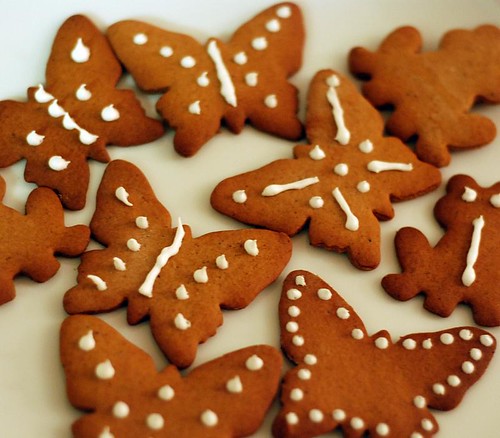
Since my father's fiancĂ© N moved in however we have developed a slightly different 'feel' to our Christmas, with different food reflecting the changes and additions to the family.  N brought the idea of Pepparkakor to the household, as she had sampled them when visiting friends from Sweden.  They're a little like gingerbread biscuits, but incorporate other spices and flavours as well as being a bit crunchier than English gingerbread.  With a hole in the top for a ribbon and  cut into decorative shapes they can be hung on the tree.

I tend not to do the same Christmas cake as my mother used to (and I presume still does) any more, because living with Dad who doesn't like the icing makes it a bit of a chore to eat all by myself.  Instead I have substituted Nigella Lawson's Certosino recipe, which I seem to remember she admits to stealing from an Italian friend.  I will therefore reproduce it here later at an appropriate moment; it contains spices and dried fruit so is perfectly seasonal.

Pepparkakor


You Will Need: Large bowl, small bowl, wooden spoon, coffee cup (to measure; about the size of an American 'cup'), happy-shaped biscuit cutters, baking tray and greaseproof paper, cling-film, dinner knife, fork, teaspoon, tablespoon, grater, thin ribbon if using

8 ounces unsalted butter
1 1/2 cups caster sugar
1 tablespoonful maple syrup
1 egg
3 1/2 cups plain flour
2 tsp baking soda

2 tsp cinnamon
2 tsp ground ginger
2 tsp ground cloves
splash of orange juice
2 tsp orange zest

1. Cut the butter into little cubes.  Cream the butter and sugar, add the maple syrup and mix.
2. Beat the egg with the fork and incorporate into the butter mix.  
3.  Add the flour, spices, orange zest (grate a bit off the skin until you can see the white showing through, using the small cheesy holes (the diamond-shaped punctures make too much mess)) orange juice and baking soda.  
4. Knead into a stiff dough, adding more flour if need be until the whole mass will come away from the sides of the bowl.
5.  Take the dough out of the bowl, wrap in clingfilm and chill in the fridge for 2 hours.
6. Preaheat the oven to 175 degrees C.  Line the baking tray with greaseproof paper and put aside.
7.  After 2 hours remove the clingfilm, lay the dough out on a floured surface and roll out with a floured rolling pin with floury hands until it's about 1/8th of an inch thick.  
8.  Cut the dough into shapes, making a hole in each one with the point of the knife for the ribbon; remember that the biscuits will expand as they cook so make the hole relatively big.  Transfer finished shapes to the baking tray and re-roll leftover dough until there is none left.  (if you have a teeny bit left, squidge it into an impromptu heart or circle shape and bake it anyway ;P )
9. Bake for 7-10 minutes.  When browned, transfer to a cooling rack.  When completely cool they can be ribboned, hung or scoffed!

In writing the 'You Will Need' for this post I've reflected once again that making a cake is like laying a table setting for one very hungry soup-eating giant, who needs a fork for some reason and takes sugar in his coffee.  All baking seems to require at least 3 kinds of spoon.  It's probably a law.